Showing posts with label mixing boards. Show all posts

Saturday, October 22, 2016

Presonus StudioLive AR12 USB Walkthrough

The Presonus StudioLive AR 12USB Mixer - A Walkthrough

Ever since I had heard about the new Presonus StudioLive AR Hybrid boards, I have wanted to try one out. They are a true hybrid board, combining the necessary features for live sound but also acting as a multi input interface to your digital recording system.

The Presonus StudioLive AR 12USB Hybrid Board


The Hook Ups

One of the coolest things about this board are the number of different hook-up configurations, and the output to the computer. The Super Channel, for instance, combines inputs from RCA jacks, the included Memory Card slot or a USB input - but unlike most really good mixers this channel also includes Bluetooth capability for hook ups to a phone, tablet or computer. This makes streaming music during breaks (or for Karaoke) extremely easy. This channel also has the 2 monitor outputs so those signals can be routed through the stage monitors too (this is essential for Karaoke or for dubbing in additional vocal tracks to a completed instrument mix).

The USB output on the back of the board is a standard USB 2 hookup, and will connect to any modern computer so that you can use the board as a recording board. 


It will work with any modern DAW system, and is incredibly easy to install; of course, it works particularly well with Presonus Studio One, and I had it up and running within minutes of hooking it up to my Dell Windows 10 system.

The first two channels are also optimized for a direct plug in for basses and guitars, with a small switch that increases your input levels so that a direct box is not necessary. Most amplified acoustics will not need this feature as they throw a much stronger signal than a standard electric guitar or bass. 


The Channels

The channels on these boards are very well thought out. The AR 12USB has 8 actual mic inputs, the first four of which have sweepable mid EQ's. The last four channels have a very nice 3 band with god EQ points, and all of these channels have 48v Phantom power for running studio condenser mics. There are also 2 distinct monitor sends (with separate slider volume controls for each of the monitor master volumes) as well as a send to the internal effects engine.

The effects are applied after the signal is split off to go to the computer, so if you are recording a live performance you can add effects to your hearts content for the live show; the board will send the unaffected signal to the computer so you can add reverbs and delays that are different from those you used live (this is actually a very important feature. It also allows you to apply effects to a singers voice when they are recording without those effects going to tape).

Note the sweepable mids on the first 4 channels and the PFL button on each channel!

The board has 2 XLR outputs as well as separate Control Room 1/4" outputs (for sending to another speaker system). The Control Room outputs carry the same mix as the main LR master fader, but they have a separate volume control.


I performed a simply test, which I will go through in greater detail in another post. I hooked up an acoustic guitar (A Seagull Excursion Spruce CW QIT electric Acoustic) and used a standard dynamic mic. i listened to the mix live, and recorded it into Studio One at the same time. 

Note separate master volume for the monitor mixes and the effects mix!

The board performed fully as I expected for a Presonus product - it sounded great with very little tweaking, and when I listened back to the song the guitar and the vocals were pristine (well, my vocals suck, but it recorded my suckiness in a very pristine manner!).


These boards are a fantastic step forward for a good, tough mixing board, and their capability as a recording interface is tremendous, delivering crystal clear, better than CD quality sound to your computer's DAW! 

To check out these boards and many other Presonus and Live Sound and recording products, go to James House of Deals, one of the best music stores in Lincolnton and your home for recording gear and computer interfaces in Lincolnton!


Saturday, September 10, 2016

Getting A Great PA For The Money

Getting the Right PA - 

And Realizing you Have To Pay For It!


PA Systems have come a long way since I first started in this business back in the 1980's. Speakers have gotten smaller, but have improved in sound quality, and the new powered speakers are making that shift in quality audio even easier for any person to use.

PA Equipment at the music store in Lincolnton
Some of the PA Gear at James House of Deals, a music store in Lincolnton

Understanding Volume Levels And Crowd Size 

Part of putting together any sound system is thinking about what you are going to be using it for, and what your own personal volume expectations are.

In the Eighties and early Nineties, most bands were at actual bars, some of which served some food, especially in this area of North Carolina. As the Nineties grew up and moved into the 2000's though, these bars started disappearing and the venues shifted to restaurants that had bars in them. Because of this, stages began disappearing and the volume levels of the bands and acts had to adjust volume levels downwards to accommodate the dining facility.

Of course, some bands and events are simply louder - a five piece band with drums and bass is going to be louder than a pair of acoustic guitars and vocals.

The second consideration after volume levels is crowd size, and this is directly related to the volume of your sound system. 


For a small act that has a few acoustics and perhaps some small percussion can often get good results from the new tower type speakers, like the Yorkville Excursion pictured here (just about everyone from Bose to JBL and many others are offering similar systems). 

But this system will only be good for a crowd size of about 60 - 70 people. If you are expecting 300 people, even with low volume music you will need a more substantial sound system. 

Remember that each system is designed to produce a certain amount of volume in a given physical area. Knowing the type of music that you play and what kind of crowds you expect to be performing in is essential to choosing the sound system that will fit your specific needs.


Subwoofers And The Crowd

The bass frequencies by far take up the most power in any sound system, whether it is using traditional power amps or the new generation of powered speakers.


Adding one or more subwoofers to a system drastically increases the volume levels and crowd sizes that you will be able to perform in front of no matter what type of music you are playing, and for some types of music subwoofers are essential. 

This is especially true of DJ's who are playing the latest pop, R&B and Rap hits. These styles in particular are beginning to use a lot of sub-harmonic frequencies that can't be adequately reproduced by a regular full range speaker. 

A rock or country band, on the other hand, in front of small crowds might not need much more than a set of small powered speakers on stands, and they will only send vocals through these speakers - the stage volume of the drums and other instruments can give a great audience mix in smaller venues and at small outdoor shows (50 - 100 people depending on volume expectations). Something like a 12" JBL or EV, or even some high quality smaller 10" powered speakers like the ones pictured below can do very well for this type of application.


But as the crowd size increases, stage volume from the instruments becomes inadequate to provide good sound.  Lets take a system that has 2 x 10" powered speakers like the one above. The band, DJ or Karaoke provider has been doing smaller 60-80 person crowds, but they are now going to start entertaining people in the 200 - 300 person range.

Adding one or two powered subwoofers to the powered mains allows the bass frequencies to be handled by the subwoofer, leaving the 10" speakers to handle the mid & high frequencies. This really frees up the 10" speakers, making the entire system much more efficient and allowing you to reach maximum clean volume levels, with all instruments and drums miked up in addition to the vocals.

This is achieved by running the system signal from the board into the subwoofer first (most subs have a left and right input in case you are running a stereo system, like the control panel pictured below).


So, from the board you would plug into the left and right inputs on the Subwoofer. On the right you will see the link out options; you will notice that on most subs one of these outputs is going to be listed as a 'High Pass' output. This means that the Subwoofer is automatically eliminating the sub frequencies below a certain level (usually 80 - 100 Hz) when it sends the signal on to the main speakers. 

If you are using 10" or 12" speakers, use the High Pass output - this will allow the speaker to work much more efficiently since all it is reproducing are the lower mid to high frequencies. 

The addition of one to two subwoofers (depending on your actual volume needs) will allow to increase your audience size to the 300 person range quite easily.

Powered speakers make these alterations to your sound system very easily. With traditional powered mixer or power amp systems, you would need to add one to two amplifiers when you added the subwoofers to the system, and any time you needed more speakers more amplificatiers would need to be added.

With powered speakers it is very easy to scale a system up and down. With our example system - a small mixer, 2 x 10" powered main speakers and one 18" powered subwoofer, like the one pictured below, you can take just the 'Top' or main speakers (the 10" speakers) for smaller more intimate gigs that are going to have a smaller audience size, and take the subwoofer when you want to bring the serious thump!


Yorkville 18" Powered Sub Woofer in lincolnton
A close-up of the Subwoofer pictured above


This Yorkville system is very powerful but quite affordable, coming in at a regular sale price of just $1791.99 at the newest music store Lincolnton offers, James House of Deals. This system is suitable for full bands, high capacity Karaoke and light to medium DJ applications.

If your band played music that really needed to pack a lot of punch, like certain types of metal or dance music (or if you were playing crowds in the 500 - 600 person size), you would probably want to consider adding another subwoofer and upgrading the Main speakers to 12" or 15" speakers. 

The Price of Admission

Lets face it, cost is relative. Some people have a lot of money, and others have to scrape their resources together for major purchases. One thing is sure, even though sound systems have gotten less expensive (and much better) over the years, you will get what you pay for when it comes to sound systems. That $500 combo system might seem like a great deal at the time, but if it does not fit the music you are playing, or the audience size it will be money that could have gone to a more capable system and adaptable sound system.

So before you buy any system, think about the type of music you play, how loud you expect that music to be, and the size of the crowds you want to be able to play in front of. Then look for the best gear (not necessarily the cheapest) that will fulfill your sound system needs.

For advice on PA gear in Lincolnton, Charlotte, Gastonia, Hickory, Rock Hill or any of the surrounding towns, James House of Deals can give you the advice you need to build the right sound system for what you are trying to do whether you are a band, a church, a DJ or simply need a small system for business conferences!


Monday, August 29, 2016

Yorkville PGM and VGM Series Mixers - A Review

Yorkville PGM 8


Modern PA systems are going more and more to a passive mixing board combined with powered speakers, and there are a lot of small mixing boards on the market. 

The biggest determining factor of the type mixing board you will need is going to be how many actual mics you will need to plug into the board.

One thing to understand is that all boards on the market today count their stereo channels as separate channels, so a board with 4 mic channels and 4 stereo channels would be a 12 channel board. It is important to find out how many actual mic inputs come on any board.

This is one reason why I really like the Yorkville PGM8 and VGM14 mixers; the PGM8 board has six actual mic inputs, the VGM14 has 12 actual mic inputs. Both of these are higher than average mic inputs for 8 and 14 channel boards.

PA gear in Lincolnton NC
Yorkville PGM8 includes 6 actual mic inputs

The boards do share some similarities, but the VGM14 has some extra features we will get into!

The PGM8 by Yorkville 


The PGM8 by Yorkville, as mentioned above, has 6 dedicated mic inputs, a 7 band graphic EQ, built in effects and very good 3 band EQ on each channel. it also features a record in and out section with separate record out levels (a feature almost unheard of on this type of board). The PGM8 also has dedicated faders for the main Monitor volume, the internal FX return, and the Stereo return for outboard effects or other stereo source signals, such as CD players, etc.


The most useful of these is the master volume fader for the monitor mix. The PGM8 also features XLR outputs on the back of the board for easy connection to powered speakers or power amps. Many boards this size are limited to 1/4" outputs, which are also available on the PGM and VGM mixers.

Both mixers also feature a tough as nails construction with metal runners down the sides and curving around the front of the board.
(see pics below)

Note the Aluminum bracing and all metal construction - this is the same on the VGM and PGM mixers!

You can see the Aluminum bracing wraps around the front, giving the board excellent protection!


Faders, Buttons and Knobs oh My! 

The faders, buttons and knobs on these mixers have a durable, silky feel to them - the faders in particular have a nice long throw with good resistance, and the knobs and buttons both have a very robust feel and good build quality.

The VGM14 - What's the Difference?


The VGM14 is very similar to the PGM8, but it does have a few key advantages. The biggest is the number of mic inputs. At 12 actual mic inputs this board has enough capacity for most bands and church applications, but it does have some big advantages over the PGM8 besides the number of inputs!


Like the PGM8, the VGM14 has main XLR outputs on the back of the board, mirrored by 1/4" inputs on the front of the board, and of course the RCA record outputs. 


It also has several other very important features though!

The first is the swept mid EQ on the main mic channels - if you are not aware of swept mid EQ, it allows you to pick the frequency of the mid band EQ. The frequency sweep goes from 100Hz to 5K, giving you a broad range of frequencies for tonal shaping or feedback elimination.

The other main difference in the VGM14 mixing Board is that it has a 9 band graphic EQ, and the EQ can be selected to run either the mains or the monitor system. This is important as most feedback occurs on the monitor system, and this is a feature that is rarely seen on boards in this size and price range. 

The VGM14 also has slightly longer faders, but the board is just as robust, with the same Aluminum side rails for protection, and the same rock solid feel on the faders and the buttons and knobs!

If you are looking for small but extremely capable mixing boards, consider the Yorkville PGM8 and VGM14 for your mixing needs. Call one of the best music stores in Lincolnton for the best prices on these boards, and when you are looking for the PA Gear Lincolnton players need come to James House of Deals & Pawn to see what is available, and what the best system for your band or venue is!


Tuesday, August 9, 2016

Karaoke - Fun For The Family Or At The Bar!

Karaoke - The New System

Karaoke has been a favorite activity of people for a long time, though it has declined a bit from its peak in the 1990's. While there are still some all in one karaoke systems out there, the modern way of running a system delivers a much better sound for the same or less money than the all in one systems many people are used to!

No More Karaoke CD's!

Karaoke CD's are now pretty much a thing of the past - yet one more thing that the modern communication system that has developed excels at is delivering on demand content, and Karaoke songs are no different. There are huge amounts of variety on YouTube, but most online sources such as Apple and Google Play also offer huge amounts of karaoke material.

With your laptop or a tablet it is easy to stream the song in, and send the audio to a dedicated sound system while displaying the lyrics either on the laptop display or a TV set up as a second display.
 

mixign board for Karaoke
There are several different considerations when it comes to Karaoke - the first, which we talked about above, is getting the song and video files.

The second is sending the music to your speakers, and mixing the microphones into the music so everything is coming out at the same levels!

Most home stereo equipment will not do this - home stereos are almost always limited to a single source, so either you would be amplifying the music or your voice, but not both at the same time.

This is where a mixer comes in handy - using a modern mixer, like the Yorkville VGM14 pictured above, allows you to mix the music signal (from the headphone output of your computer or tablet into an input channel on the mixer) and the microphones. With even a small board, running the music source and 2 - 3 microphones is easily accomplished.

Most modern boards also have build in digital effects and many offer both EQ on each individual channel and a main graphic EQ. 

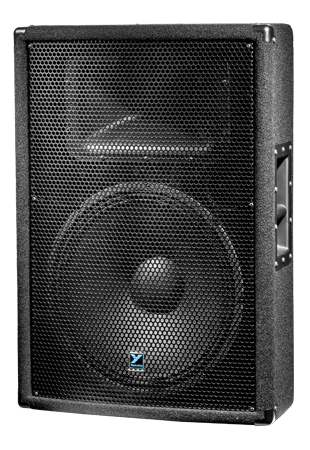
If you are using a mixing board like the one above, getting powered speakers like the Yorkville YX15PC Powered Speakers pictured below is ideal - these are 15" powered speakers, which make a lot of very clean, pristine sound. They are perfect for professional applications or in your house, and have enough thump to keep the party hoppin'!

Of course, it is all a matter of size and budget - if you have a smaller area or do not need as much volume, a small powered mixer and several passive speakers will allow you to mix the mics and music together. 

The Yorkville MM5D with a pair of Yorkville CX80 8" speakers can supply a very good, full sound for less than $500!


So relax - it is easier than ever to build a small karaoke system, and the sound quality of the systems that are in use today are much, much better than the all in one karaoke systems of the past!

For more information, visit one of the music stores in Lincolnton James House of Deals & Pawn, and when you need the PA Gear Lincolnton players require, James House of Deals can make sure you get the right system for your needs!